The plastic £5 is coming in September – what do you think? good or bad?

£5

The New Fiver was unveiled at Blenheim Palace on 2 June and will be shown to the public at a number of events across the UK this summer.

The New Fiver will enter circulation on 13 September. It will then take a few weeks for the notes to spread across the country to shops, businesses and banks.

In May 2017 paper £5 notes will cease to be legal tender and will no longer be accepted by shops and banks.

Other notes and coins

The three Scottish banks are also printing their next £5 and £10 notes on polymer. Clydesdale Bank will be issuing a polymer £5 on 15 September, the Bank of Scotland on 4 October and RBS in November 2016. The Royal Mint will be issuing a new £1 coin in March 2017.

Future banknotes

The New Fiver is the first of the Bank of England’s new series of polymer notes, with the £10 and £20 notes to be replaced with polymer designs over the coming years.

Ten Pound note design

New ten pound note

The new polymer £10 note featuring Jane Austen will enter circulation in summer 2017.

Twenty Pound note design

New twenty pound note

The new polymer £20 note featuring JMW Turner will enter circulation by 2020.

There are currently no plans to replace the £50 note featuring Boulton and Watt and we will announce the material for future £50 notes in due course.


The New Fiver has a number of security features which make it even harder to counterfeit. These include the see-through window and the foil Elizabeth Tower which is gold on the front of the note and silver on the back. You can learn more about these security features and how to check your notes here. Only a tiny proportion of notes are counterfeit – 0.0075% in 2015 – but we want to stay one step ahead of the counterfeiters and these new security features help us do this.

Time to renew your Tax Credits

Tax_Credits

Many small business owners are on low incomes whilst they build up their business and often they can claim Working Tax Credits.

The following summary is from Citizens Advice

Who can get Working Tax Credit

The number of hours a week you have to work to be able to get Working Tax Credit depends on your circumstances.

If you’re single or in a couple, and have no children, you can qualify if:

  • you are 25 or over and you work at least 30 hours a week, or
  • you are 16 or over and you work at least 16 hours a week and you are disabled and you get a qualifying benefit, or
  • you are 60 or over and you work at least 16 hours a week.

If you’re single and have at least one child, you can qualify if:

If you’re in a couple and you are responsible for a child or young person, you can qualify if:

  • you are 16 or over and you or your partner works at least 16 hours a week and the two of you work at least 24 hours a week between you in total. For example, you can meet this condition if you work 16 hours a week and your partner works 8 hours a week. If only one of you works, that person must work at least 24 hours, or
  • you are 16 or over and you work at least 16 hours a week and you are disabled and you get a qualifying benefit
  • you are 16 or over and you work at least 16 hours a week and your partner is a hospital in-patient or entitled to Carer’s Allowance or in prison or gets certain disability benefits
  • you are 60 or over and work at least 16 hours a week.

There is an online questionnaire you can use to find out if you might qualify for WTC. Go to the GOV.UK website at www.gov.uk.

What counts as work

Your work can be:

If you’re self-employed

Some self-employed people are not eligible for Working Tax Credit. To qualify, your self-employed work must aim to make a profit. It must also be commercial, regular and organised.

If you’re claiming tax credits, you’ll be sent a renewal pack. It will tell you how to renew your tax credits.

You must renew your tax credits by 31 July 2016 if your renewal pack has a red line across the first page and it says ‘reply now’.

steve@bicknells.net


£15m in R&D Grant funding up for grabs

R And D - Research And Development Tecy Background Banner

I am always looking for ways to help businesses and last week Barrie Dowsett sent me these details..

Innovate UK has launched a £15m grant funding pot for innovative projects in any technology, engineering or industrial area.

As grant funding is non-repayable, and Innovate do not take any equity, IP or commercial rights over your project, I thought you would be very interested in knowing more about this excellent funding opportunity. Priority will be given to proposals that are likely to lead to sustainable gains in productivity and/or access to new overseas markets through export led business growth.

Key information:

-Funding is available for testing the feasibility of your idea (including proof of market), research and develop it and demonstrate it in a prototype

– Project value: £25k to £1m depending on type of R&D undertaken

– Project duration: 6 to 36 months

– Micro/small business receive up to 70% of project costs, Medium up to 60% and large businesses receive up to 50% dependant on stage of research/development

– Application deadline is 12pm on the 7h September 2016

– Funding made available from around December 2016 onwards

National success rates for Innovate UK grants are typically less than 10%, however Myriad have success rates approaching 60%.

You can find out more details at

https://www.gov.uk/government/publications/innovate-uk-open-funding-competition

https://www.myriadassociates.com/news/2016/innovate-uk-launches-its-first-open-competition/

steve@bicknells.net

Theatre tax relief – does your production qualify?

Actor Giving Speech Shakespeare Open Air Theater Shakespeare Performance.

Finance Act 2014 introduced a new regime for the taxation of Theatrical Production Companies (TPCs) that claim a new relief for the theatre industry: Theatre Tax Relief (TTR).

The legislation provides specific rules for relief on theatrical productions, including touring productions, in addition to setting out how the taxable profits and losses of those productions shall be calculated.

Tax treatment

For tax purposes only, the legislation:

  • deems that each production is a separate theatrical trade with a start and end date separate to that of the company
  • describes what expenditure is eligible for additional tax relief and circumstances where there are exceptions to the normal rules for income and expenditure, and
  • restricts the use of losses associated with that separate theatrical trade in certain circumstances.

Theatre Tax Relief (TTR)

TTR is available to TPCs engaged in the making of:

  • theatrical production (TTR40020)
  • for live performance to paying members of the general public or provided for educational purposes (TTR40030), and
  • at least 25% of the core expenditure (TTR50010) is incurred on goods or services provided from within the European Economic Area (EEA) (TTR50050).

Those TPCs that are entitled to TTR can claim:

  • an additional deduction in computing their taxable profits (TTR55010), and
  • where that additional deduction results in a loss, to surrender losses for a Theatre Tax Credit (TTC) (TTR55100): a payable tax credit due to the TPC.

Theatre Tax Credit rates

The TTC rates are:

  • 25% for touring productions, and
  • 20% for all other qualifying productions.

Both the additional deduction and the Theatre Tax Credit are calculated on the basis of core expenditure up to a maximum of 80% of the total core expenditure by the TPC.  Core expenditure is that expenditure directly incurred in producing the production and closing the production.

According to The Stage ..

Productions only qualify if they are live performances to paying members of the public, and aim to make a profit.

Productions performed in schools are the only exception to this, and are still eligible for the tax relief as they are for “educational purposes”.

Tax relief can be claimed on performances that are live streamed as part of schemes such as NT Live, as long as the company’s main aim is to stage live performances for paying, present audiences.

Likewise, performances that are recorded are also eligible as long as the recording is not the aim of the production’s overall run.

Circus productions are only eligible if they are “scripted”, “dramatic” and the performers “play a role”, rather than being simply “a display of athleticism, skill or strength”.

Other art forms that are eligible include ballet, contemporary ballet which incorporates classical ballet, and other dance performances that are “dramatic productions”.

HMRC has a specialist unit, the Creative Industries Unit, to deal with claims to Theatre Tax Relief (TTR) and the other creative industries tax reliefs (for example, film and video games).

The unit can be contacted by email at creative.industries@hmrc.gsi.gov.uk or by telephone on 03000  510191.  Alternatively, the unit can be written to using the following correspondence address:

The Creative Industries Unit
Manchester Incentives & Reliefs Team
Local Compliance S0717
PO Box 3900
GLASGOW
G70 6AA

steve@bicknells.net

Rent a Room and earn £7,500 tax free

Fotolia_45741373_XS cash

The Rent a Room Scheme lets you earn up to a threshold of £7,500 per year tax-free from letting out furnished accommodation in your home. This is halved if you share the income with your partner or someone else.

You can let out a room or an entire floor.

How it works

The tax exemption is automatic if you earn less than the threshold. This means you don’t need to do anything.

You must complete a tax return if you earn more than the threshold. From 6 April 2016, this is £7,500. For the 2015 to 2016 tax year, the threshold was £4,250.

When you can use the Rent a Room Scheme

You can use the scheme if:

  • you let a furnished room to a lodger
  • your letting activity amounts to a trade, for example, if you run a guest house or bed and breakfast business, or provide services, such as meals and cleaning

When you can’t use the Rent a Room Scheme

You can’t use the scheme if the accommodation is:

  • not part of your main home when you let it
  • not furnished
  • used as an office or for any business – you can use the scheme if your lodger works in your home in the evening or at weekends or is a student who is provided with study facilities
  • in your UK home and is let while you live abroad
  • the whole of your home, rather than a part of it

SpareRoom

SpareRoom, the UK’s busiest flatshare site. Every three minutes, someone finds a flatmate with SpareRoom.

The table below shows the change in monthly rents between 2009 and 2014 according to Spareroom:

Ave Rent 2009 (£) Ave Rent 2014 (£) Rental Increase %
London & suburbs £549 £691 25.8%
East Anglia £345 £398 15.4%
East Midlands £314 £353 12.6%
North England £304 £334 9.8%
North West England £316 £359 13.8%
South East England £390 £449 15.2%
South West England £347 £394 13.7%
West Midlands £334 £366 9.7%
Yorkshire & Humberside £312 £347 11.3%
Northern Ireland £238 £260 9.5%
Scotland £325 £403 24.2%
Wales £302 £332 9.9%
UK £500 £550 10%

Are you PSC ready?

I want you

From the 30th June 2016 all companies will be required to prepare a PSC Register.

You need to start keeping a register of your people with significant control (PSC).

A PSC is someone in your company who:

  • owns more than 25% of the company’s shares
  • holds more than 25% of the company’s voting rights
  • holds the right to appoint or remove the majority of directors
  • has the right to, or actually exercises significant influence or control
  • holds the right to exercise or actually exercises significant control over a trust or company that meets any of the other 4 conditions.

You’ll need to keep your PSC as part of your company register, as these need to be available for inspection.

PSC BBA v2

Failure to comply will result in fines and up to 2 years in prison!

steve@bicknells.net

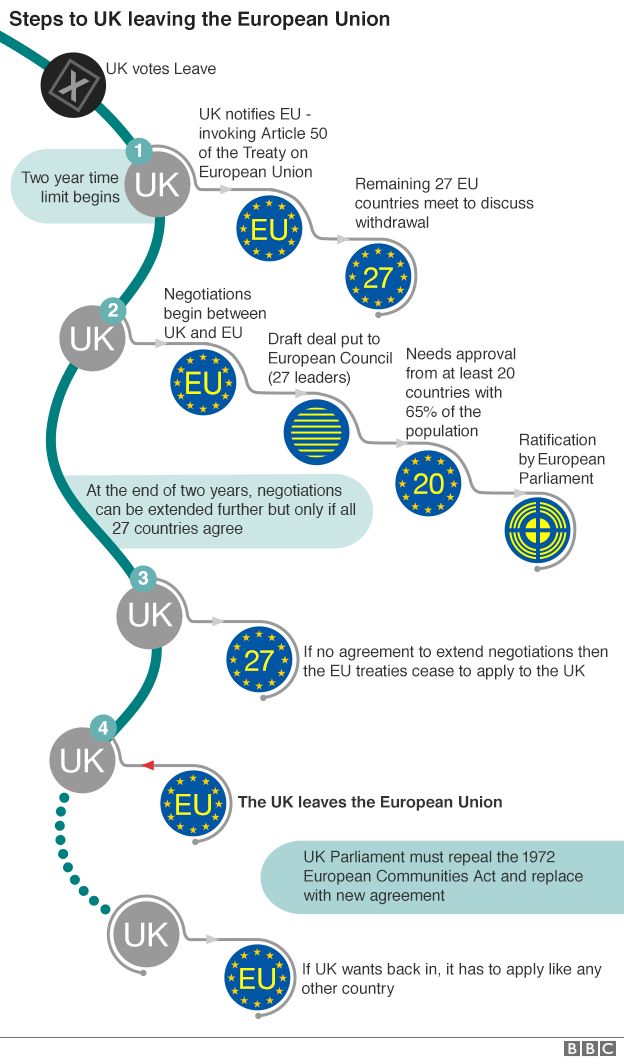
Brexit – ‘independence day’ or ‘the apocalypse’

Brexit

Before the vote we had lots of warnings:

  • Recession
  • Job Losses
  • Emergency Budget
  • Exchange rates crisis
  • Stock Market crash
  • Trade Deal problems (back of the queue!)
  • House Price Boom expected to end and house prices will fall 18%
  • £30bn of tax increases
  • Increased fuel prices
  • The cost of using mobiles in Europe could increase
  • EU Travel will cost more

I have to say it felt like everyday there would be a new and bigger more extreme warning of impending doom.

I think the Remain Camp over did the disaster stories and that lost them credibility.

The Leave Campaigners put forward a much better argument as demonstrated in this movie

So what happens next

So far ….

David Cameron has resigned and his successor is widely tipped to be Boris Johnson.

The Labour Leader Jeremy Corbyn has had a number of key members of the shadow cabinet resign and there could be a leadership challenge

The Scottish parliament want to veto the Britain’s Exit which could lead to Scotland having another vote on independence

Its expected that it will take up to 2 years to exit the EU and the UK vote could lead other countries to consider referendums

http://ichef.bbci.co.uk/news/624/cpsprodpb/F9AF/production/_90091936_img_5827.png

Its going to be a bumpy ride so prepare yourself now!

steve@bicknells.net

HMRC Directors Loan 2016 Rules

Young woman with checklist over shoulder shot

The latest version of the Directors Loan Tool Kit for 2015-16 was published in May 2016, official the guidance is voluntary, but I am not sure that tax inspectors will consider as voluntary!

Here is a link to the full tool kit

Click to access 2015-16_DLA_Toolkit_rev.pdf

Here are some things to watch out for when preparation your accounts

DLA 3

DLA 1

DLA 2


steve@bicknells.net

Space Accounting – Are you ready for take off?

Space shuttle taking off on a mission. Elements of this image furnished by NASA

Space flights could soon become available to everyone.

According to Virgin Galatic

…..The roughly 700 Virgin Galactic future astronauts who have already paid deposits for their flights on SpaceShipTwo come from more than 50 different countries, about half of which have never before sent a human to space. They span in age from under 10 to over 90 years of age. They practice many professions and speak many languages.

In the near future, our astronauts will share their version of the Overview Effect with audiences who have never dreamed of hearing it and who will go on to be the innovators, inventors, and entrepreneurs of tomorrow. Some of them may even earn the scholarships offered by the Virgin Galactic Future Astronaut community through Galactic Unite.


Space flights are an emerging industry and are expected to become dominate in the coming decades.

Many other opportunities are also under consideration including manufacturing in space! and possible mining work taking place on the Moon and Mars

What tax jurisdiction do space activities fall under? What accounting standards do we use in space? Which accountant are we going to send to audit the mining operation on the moon?

It will take time to develop Internationally Accepted Accounting Standards for Space. It will take time to solve the accounting problems of space travel. And it will take time to train the next group of auditors to be astronauts. I encourage my fellow CPAs to get involved in the commercialization of space and start a space department at your firm. We should be working together now to develop solutions to these problems and enable the exploration of a new frontier. [accounting today Article By Zach De Gregorio ]

http://www.sciencespacerobots.com/extras/asteroid_mining_trillion_dollar_industry.jpg


steve@bicknells.net

Things an accountant should do every day

junge frau lernt für eine prüfung

Things are changing fast, we now live in a cloud based technology driven world.

https://sage-exchange.co.uk/image/52a7209e36a0c_business-confidence-ig1.png

Accountants are changing too, clients now:

  • Use cloud based systems to enter transactions
  • Raise invoices online and get paid online
  • Connect their bank accounts to their software
  • Attach copies of receipts to transactions

Accountants should be working on a daily basis with their clients in areas such as…

Business Strategy

Your accountant should be a trusted advisor to your business. Accountants are often aware of business trends, legislation and new technologies so they can work with you to find the best ways to achieve your goals.

Tax Planning

Just processing the numbers isn’t enough, your accountant should be exploring the tax consequences of your proposed decisions, for example

  • the tax payable on an overdrawn Directors Loan Account
  • the benefits of low CO2 emission cars
  • the tax differences between buying and leasing equipment
  • owning investment property personally or in a company
  • Business Acquisition and Disposal tax issues

Regular Calls, E Mails and Meetings

Accountants haven’t been good at this in the past but they need to become accessible to clients. Its no good just having contact once a year to sign off the accounts. For accountants to become business partners clients need to be free to ask them anything whenever they need help or advice. Providing a personal tailored service is a priority and clients now expect it.

Accountants need to respond quickly to clients requests, waiting days for a reply won’t do!


steve@bicknells.net