65% of SME’s rejected for a loan want to try alternatives… would you

Bank loan

A government consultation ended last week into whether legislation should force banks to refer rejected loans to alternative sources of finance.

At present the largest four banks account for over 80% of UK SMEs’ main banking relationships. Many SMEs only approach the largest banks when seeking finance. Although a large number of these applications are rejected – in the case of first time SME borrowers the rejection rate is around 50% – a proportion of these are viable and are rejected simply because they don’t meet the risk profiles of the largest banks. There are often challenger banks and alternative finance providers with different business models that may be willing to lend to these SMEs.

Although the largest banks will sometimes refer these SMEs on, in many cases challenger banks and other providers of finance are unable to offer finance as they are not aware of their existence and the SMEs are not aware of the existence of these alternative sources of finance.

SME’s most trusted advisors are Accountants, according to Accountancy Age a fifth of SME’s are more open with their accountant than their bank manager and half believe that their Accountant is the most valuable source of business advice and just under half turn to their Accountant first for advise.

So why aren’t banks working more closely with accountants? I think its because its hard to work with individual accountants and build multiple relationships, its much easier to work with groups of accountants on a national basis such as www.business-accountant.com

Would you ask your accountant if you were looking for finance?

steve@bicknells.net


Are you waiting for a New ISA?

fotolia_491138_s.jpg

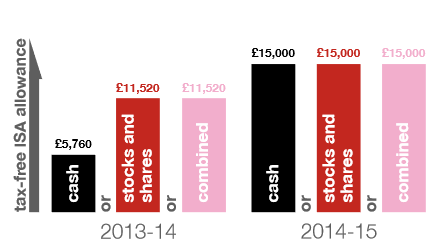
From 1st July 2014, individual savings accounts (ISAs) will be reformed into New ISAs (NISAs) with an annual limit of £15,000.

You can invest your NISA in Cash, Stocks and Shares or in any combination.

ISA

Gov.uk

The limits for Junior ISAs and Child Trust Funds have already been increased from £3,700 to £4,000.

From July, restrictions on corporate bonds and gilts will have the 5 year rule removed allowing you to invest in short dated securities such as Retail Bonds.

There are plans to enable Peer-to-Peer loans to be held in NISA’s but that’s still in the consultation stage.

Between now and July the most you can invest in an Cash ISA is £5,940.

So are you waiting for a New ISA?

steve@bicknells.net

Why property investors like Micro Entity Accounts

Micro Entity

A company meets the qualifying conditions for a micro-entity if it meets at least two out of three of the following thresholds:

  • Turnover: Not more than £632,000
  • Balance sheet total: Not more than £316,000
  • Average number of employees: Not more than 10

There are approximately 1.56 million micro-entities in the UK, as compared with a total number of companies on the UK register of approximately 2.8 million.

Most property businesses will have less than 10 employees and less than £632,000 turnover.

If you are a property investor filing Abbreviated or Full Accounts you have to report property values at their fair value, which means you tell everyone what you think the property is worth. You may not want to do that, especially if you are planning to sell as it tells the potential buyer what you think its worth and that might be an issue in negotiations.

Under the Micro Entity regime you aren’t allowed to use fair value and have to use Historical Cost. Which most Property Investors will prefer.

No notes are required with Micro Entity Accounts and any advances or financial commitments are shown at the foot of the Balance Sheet, often this is simply the value of the Mortgage outstanding.

steve@bicknells.net

What is the 10% Crowdfunding Rule?

Crowd and piggy bank

Crowdfunding is a way in which people and businesses (including start-ups) can try to raise money from the public, to support a business, project, campaign or individual.

The term ‘crowdfunding’ applies to several internet-based business models, only some of which we regulate.

The Financial Conduct Authority don’t regulate:

  • Donation-based crowdfunding: people give money to enterprises or organisations whose activities they want to support.
  • Pre-payment or rewards-based crowdfunding: people give money in return for a reward, service or product (such as concert tickets, an innovative product, or a computer game).

The FCA do regulate:

  • Loan-based crowdfunding: also known as ‘peer-to-peer lending’, this is where consumers lend money in return for interest payments and a repayment of capital over time.
  • Investment-based crowdfunding: consumers invest directly or indirectly in new or established businesses by buying investments such as shares or debentures.

Further details on their website

The Financial Conduct Authority is proposing that starting from this year inexperienced investors in equity schemes will have to certify that they will not invest more than 10% of their portfolio in unlisted businesses.

Firms that run the website platforms say the rules are too tight and will put off potential investors.

Barry James, founder of The Crowdfunding Centre, says: “Make no mistake, the infamous 10% rule – however it’s dressed up – does just that: it takes the crowd out of equity crowdfunding.”

Despite the crackdown, investors who lend to small companies will not be covered by the Financial Services Compensation Scheme which protects investors if they are mis-sold an investment or if the company they invest in goes into liquidation.

The FCA believe there is high risk that consumers could suffer losses from peer-to-peer lending.

Is the risk too high? would you invest?

steve@bicknells.net

How to use the new UK pension rules to make £500….

CASH ICON

Here is the theory….

  1. You pay £8,000 into a defined contribution pension fund
  2. Its topped up by £2,000 (tax back from the government)
  3. So that’s £10,000 in your pension pot
  4. You take out £2,500 (25%) tax free
  5. You then pay 20% tax on £7,500 = £1,500
  6. So £8,000 in + £2,000 credit – £1,500 tax = £8,500 which is £500 more than you paid in

This is based on the HMRC rules.

You must be at least 60 years of age to take your pension pot as a lump sum.

You may qualify to take all of your pension pot as a lump sum if:

  • one of your pension pots is worth £10,000 or less

If a lump sum is paid instead of a small pension before you started to get that pension, only 75 per cent of the lump sum is taxable.

There will be some charges from your pension provider but these should be small, take look at this list for a comparison

ABI data suggest that 25% of pension pots are less than £10,000

steve@bicknells.net

Budget 2014 – Pensions you can spend, hooray!

Pot of gold coins isolated on white

Thank Mr Osborne, its been a long time coming but an end to being forced to buy an annuity is coming….

From April 2015, pensioners will have the freedom to cash in as much or as little of their pension pot as they want, removing the need to buy an annuity.

We will now have the choice of taking a lumpsum, drawdown over time or buy an annuity.

The news wasn’t good for Life Insurance Companies who saw £4.4m wiped off their value yesterday.

If you do want to buy an annuity you be able to get free independent advice.

There will also be a new NS&I Pensioner Bond savings scheme to be available from January to all people over 65, paying interest rates of 2.8% for one-year bonds and 4% for three-year bonds.

From 27th March 2014 small penion pots can be cashed in, the ABI say that 25% of annuity sales related to pension pots of less that £10,000.

“Savers with pension pots of less than £30,000 can now take this out as cash, in what is a welcome lifeline for savers with small pension pots,” says David Macmillan, managing director at life and pensions provider Aegon UK.

There are still rules and the changes apply to Defined Contribution Schemes not Defined Benefit Schemes but this is a massive change in pension rules.

steve@bicknells.net



Are you benefiting from the Online Sales Boom?

Online Shopping

Just in case you haven’t been watching the BBC News….

A record amount of online shopping was done in December 2013, says the British Retail Consortium (BRC).

Close to one in five non-food items was bought online last month, according to the BRC survey.

There was also a 19.2% growth in internet purchases from a year earlier, the fastest increase in four years……..

The online retail boom was very much in evidence in late 2013, with many High Street chains expanding their internet offerings, and some shops reporting record figures for the amount customers purchased online around Christmas.

In a recent AccountingWEB survey on average survey respondents said more than 80% of their customers use a smartphones or a tablet and almost all expect this number to increase over the next 12 months.

Without an online presence your business is likely to be become invisible to your customers.

Its not just about having a website either, there needs to be something that will keep your customers visiting your website and you probably need an app….

steve@bicknells.net

HMRC demand payment from Landlords

Mosaïque de logements

HMRC launched the ‘Let Property Campaign‘ on the 10th December 2013.

If you’re a landlord who has undisclosed income you must tell HMRC about any unpaid tax now. You will then have 3 months to calculate and pay what you owe.

The Let Property Campaign is an opportunity open to all residential property landlords with undisclosed taxes. This includes:

  • those that have multiple properties
  • landlords with single rentals
  • specialist landlords with student or workforce rentals
  • holiday lettings
  • anyone renting out a room in their main home for more than £4,250 per year, or £2,125 if the property was let jointly, but has not told HMRC about this income
  • those who live abroad or intend to live abroad for more than 6 months and rent out a property in the UK as you may still be liable to UK taxes


According to the Telegraph….

Fewer than 500,000 taxpayers are registered with HMRC as owning properties other than their home. And yet other sources put the number of Britain’s growing army of landlords at between 1.2million and 1.4million.

Why the discrepancy? No one can say for sure, but the taxman has his answer: not enough people are declaring – and paying tax on – their property incomes and gains.

HMRC will identify those who they believe should have made a disclosure by:

  • comparing the information already in their possession with customers’ UK tax histories
  • continuing to use their powers to obtain further detailed information about payments made to and from landlords

Where additional taxes are due HMRC will usually charge higher penalties than those available under the Let Property Campaign. The penalties could be up to 100% of the unpaid liabilities, or up to 200% for offshore related income.

If you owe tax, you must tell HMRC of your intention to make a disclosure. You need to do this as soon as you become aware that you owe tax on your letting income.

At this stage, you only need to tell HMRC that you will be making a disclosure.

You do not need to provide any details of the undisclosed income or the tax you believe you owe.

It sounds like HMRC could be in for bumper Christmas if landlords take advantage of this opportunity to pay up!

steve@bicknells.net

3 reasons why businesses are sold

Business woman

When you think about it, there are really only 3 reasons why a business owner would want to sell their business:

Cashing In

Sometimes the the value of your business could be over inflated, remember the dot com bubble. Throughout history there have been times when the price that a buyer is prepared to pay is huge compared to normal business valuation models.

Investopedia – Dot Com Crash

When: March 11, 2000 to October 9, 2002
Where: Silicon Valley (for the most part)

Percentage Lost From Peak to Bottom: The Nasdaq Composite lost 78% of its value as it fell from 5046.86 to 1114.11.

Imminent Threat

This can be caused by many things:

  • New Legislation
  • Loss of Resources
  • Increased Competition
  • Loss of Banking Facilities

Basically the seller will be aware that a problem is looming and they want to sell before the problem damages their business.

Life Changes

From a buyers perspective these are often the best businesses to buy, the key reason behind the sale being:

  • Retirement
  • Relocation
  • Life Style
  • Selling due to Illness
  • New Business Opportunity

steve@bicknells.net


Garden bagging – profit from property development in your back yard

Home Office

The rate of new housing required to meet demand in England is now estimated at between 240,000 and 245,000 units a year, an increase of 10,000 new homes annually on previously accepted figures.

Gazumping and other nasties that flourished in the last property boom are making a return, as competition for homes increases with the bringing forward of the second phase of Help to Buy.

So now could be the time to sell off your garden:

  1. Its a way of building homes without building on the Green Belt
  2. It can be a zero risk way to make money if you sell the plot

Garden Bagging works as follows:

  • Home Owners with suitable land approach a local builder
  • The builder buys the right to seek planning permission for a nominal fee
  • If the application is successful the builder will pay up to 85% of the open market value of the consented plot less his costs

Alternatively you could develop the plot yourself for a typical self build its estimated that 35% would be the land cost, 40% build cost and 25% profit margin.

steve@bicknells.net